Care
How to keep a black dress black for years
Wash, dry and store a black dress so it keeps its colour and shape: cold water, reverse wash, drying and a simple quiz to test what you know.
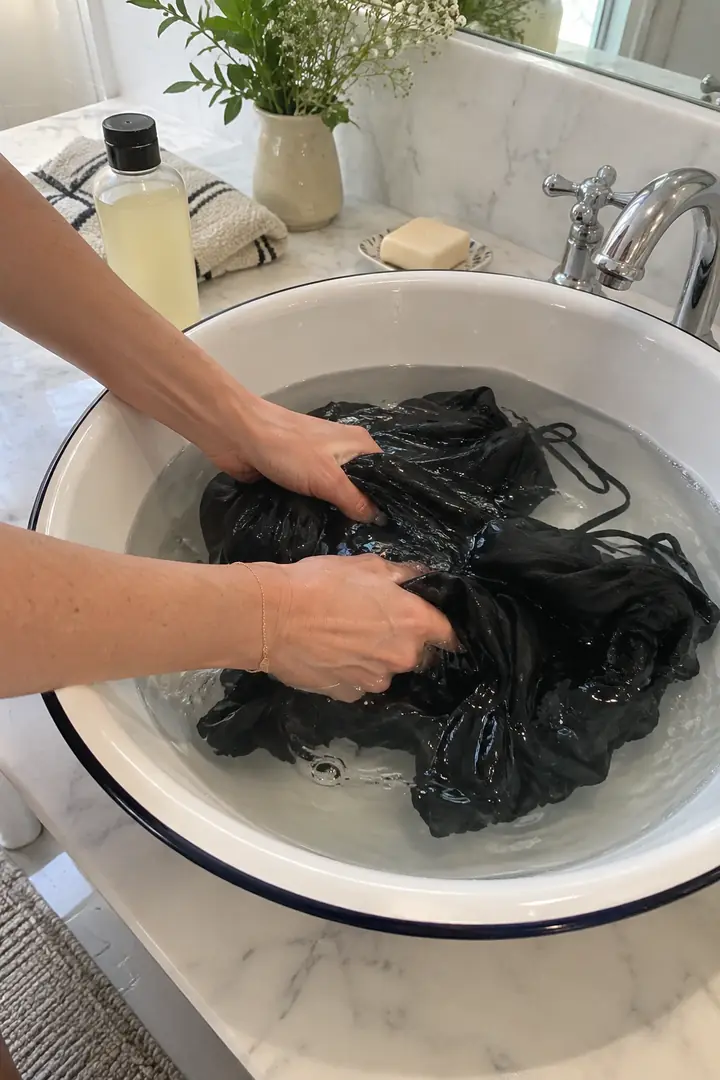
A black dress keeps its colour when it is washed less often, washed inside out in cold water with a mild detergent, dried flat or on a padded hanger, and kept away from strong light. Most fading comes from heat, friction and sunlight, not from wear. The five habits below make the biggest difference, and the quiz at the end tests what you know.
Why black fades
Black dye sits on the surface of the fibres and can be removed by hot water, harsh detergent and friction. Each wash loosens a little dye, and the fabric looks greyer over time. Sunlight and heat from a dryer break the bonds further. The result is a dress that looks brown or grey in places, especially at the seams, underarms and hem, where the fabric rubs most.
Better care also protects the shape. Hot water and tumble drying shrink many knits and make ponte lose its structure. A dress that is washed carefully and stored well can look as good after several years as it did when new.
Habit 1: wash less, spot-clean more
A black dress that has been worn once rarely needs a full wash. Hang it to air overnight, and spot-clean small marks with a damp cloth and a little mild soap. Save the full wash for dresses that have been worn two or three times, or that have touched sweat, food or make-up. Frequent washing is the fastest way to fade black.
Habit 2: cold water, inside out, gentle cycle
Turn the dress inside out before washing to reduce friction on the outside. Use cold water and a gentle cycle, and a detergent without bleach or optical brighteners, which can make black look dull. For a tight-knit or ponte dress, a delicate bag helps reduce pilling. Avoid fabric softener, which can leave a film that makes black look grey.
Habit 3: dry flat or hang, never in direct heat
Reshape the dress by hand and lay it flat on a towel, then roll the towel gently to remove water. Dry it in the shade, away from radiators and direct sunlight. For crepe and silk, hang the dress on a padded hanger until it is dry. Tumble drying, even on low, is the most common cause of shrinkage and fading in black dresses.
Habit 4: iron inside out, on a low setting
If the dress needs ironing, turn it inside out and use the lowest heat that suits the fabric. Place a clean cloth between the iron and the dress, and never iron shiny or embellished areas directly. Steam is often enough for crepe, and a steamer is the best option for lace and satin.
Habit 5: store on a padded hanger, away from light
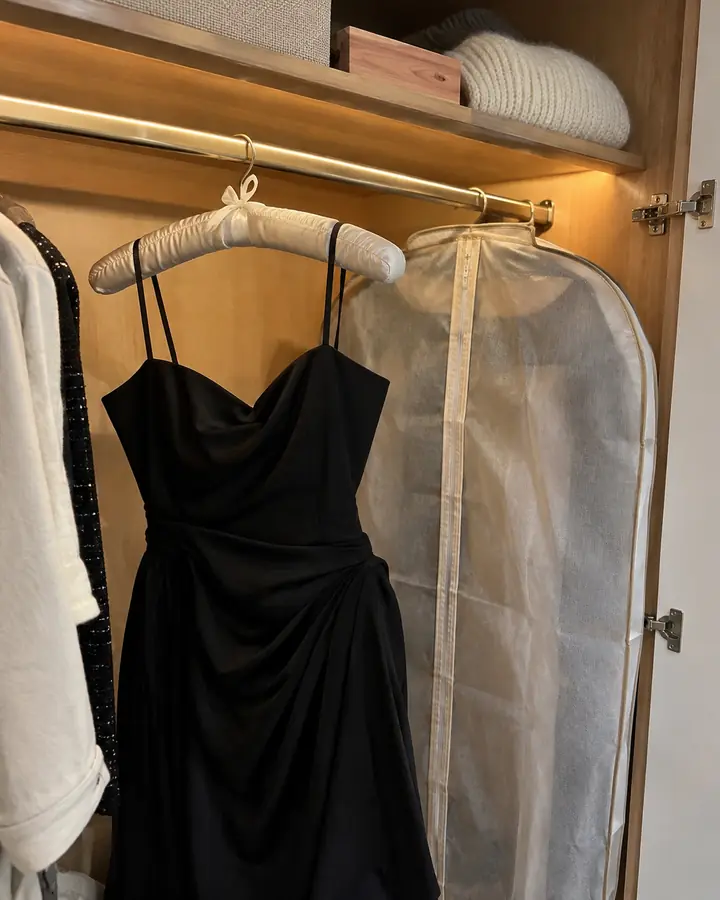
Hang the dress on a padded or wide hanger so the shoulders keep their shape. Keep it in a breathable garment bag, not plastic, which can trap moisture. Store it in a cupboard away from windows, and avoid storing it next to very bright lamps or in a hot attic. A cedar block helps against moths without touching the fabric.
Care quiz
Choose true or false for each statement. The explanation appears after your choice.
1. A black dress should be washed after every wear to keep it looking fresh.
Usually not. Frequent washing removes dye. Air the dress and spot-clean small marks instead.
2. Washing a black dress inside out reduces fading on the outside.
True. Turning it inside out reduces friction on the visible surface during the cycle.
3. Hot water is the best choice for removing stains from a black dress.
False. Hot water can fade black and shrink knits. Test a spot with cold water and a mild detergent first.
4. A tumble dryer on low heat is safe for ponte and crepe.
False. Heat and tumbling can shrink and distort these fabrics. Dry flat or hang instead.
5. Storing a black dress in a breathable garment bag helps protect it from dust and moisture.
True. Breathable covers keep dust off without trapping moisture the way plastic can.
Stains: act quickly, but gently
For a fresh stain, blot rather than rub. Work from the outside of the stain towards the centre to avoid spreading it. Use cold water and a small amount of mild detergent on a cotton cloth, and test on an inside seam first. For oil-based marks, a little dry powder such as cornflour can absorb the oil before washing. If the stain persists, or the fabric is silk or satin, take the dress to a dry cleaner and say what the stain is.
Pilling and bobbles
Ponte, jersey and knit black dresses often develop small balls of fibre on the surface, called pilling. Remove them with a fabric shaver or a clean razor held flat against the surface, never with a blade that can cut the knit. Reduce pilling by washing inside out, avoiding rough bags and not wearing the dress under a coat that rubs the same spot every day.
When to use a dry cleaner
Some black dresses should always be dry cleaned, such as structured wool, silk with a lining that is sewn in place, or dresses with beading. Check the care label before you wash anything. If in doubt, ask a dry cleaner to test a seam first. A good cleaner is worth the cost for a dress you wear to many events.
Frequently asked questions
Does vinegar keep black dark?
Not reliably. A vinegar rinse can help remove detergent residue, but it does not restore faded black. Prevention with cold water and gentle drying works better.
How often should I wash a black dress?
After two or three wears, or sooner if it has touched sweat, food or make-up. Between washes, air it and spot-clean.
Can I iron a black dress?
Yes, inside out and on a low setting, with a cloth between the iron and the fabric. Steam is often a safer option for crepe and lace.