Style
Black dress fabrics compared: crepe, jersey, ponte and silk
Compare crepe, jersey, ponte, silk, lace and satin for a black dress: opacity, travel, warmth, wrinkles and care, with a filter by need.
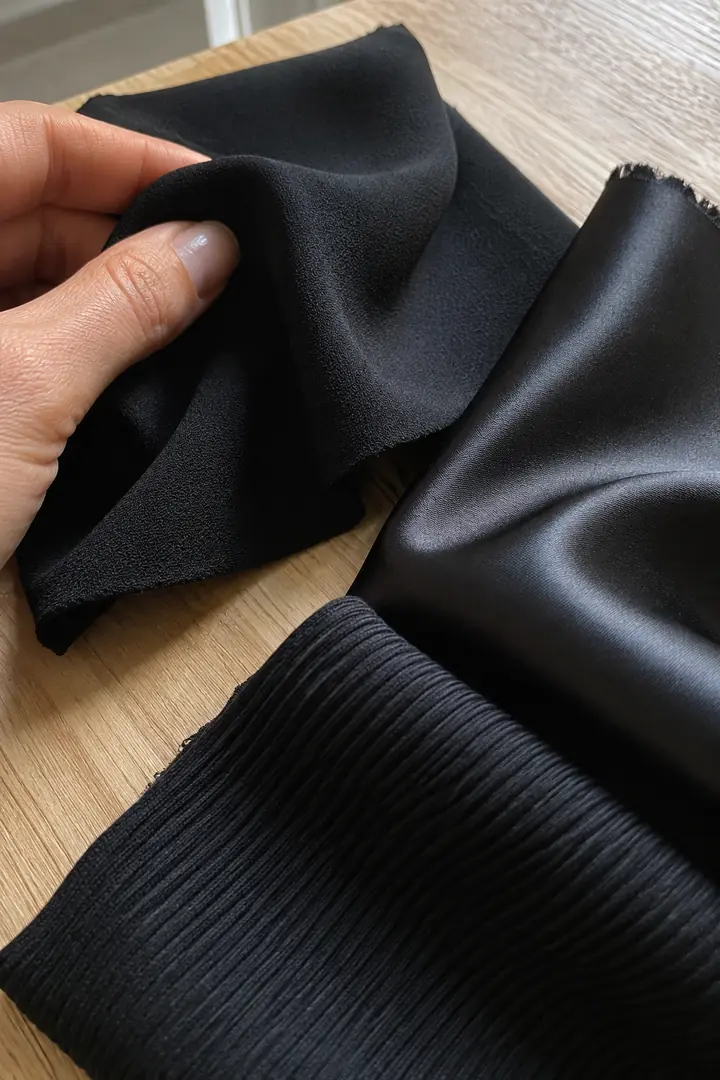
For a black dress, crepe is the best all-round fabric for formal events and work, ponte is the easiest for travel and long days, jersey is the most comfortable but needs a good weight to stay opaque, and silk or satin suit evenings only. Use the filter below to see which fabrics match the needs you have.
Black shows the fabric, not just the colour
Black is unforgiving. It shows where a fabric is thin, where it shines, where it pills and where a seam pulls. Two black dresses cut from different fabrics can look like different colours, because the surface reflects light differently. That is why the fabric is usually the best predictor of how a dress will look after a year.
Three properties matter most: opacity (can you see through it?), recovery (does it stay smooth after sitting?) and surface (does it shine, pill or show lint?). The table below uses those three properties, plus travel and warmth, to compare the common options.
Fabric comparison
Filter by what you need
Tick one or more needs. Only fabrics that match all of them stay in the table. Without JavaScript, the full table is shown.
| Fabric | Opacity | Shape after sitting | Surface | Care |
|---|---|---|---|---|
| Crepe (matte) | Good, opaque in medium weight | Very good: drapes without clinging | Matte, hides small marks well | Cold wash, hang to dry |
| Ponte (double knit) | Very good | Very good: holds its line | Smooth; can pill in time | Cold wash, dry flat |
| Cotton jersey | Good if heavy; check the front | Good, may stretch | Soft, shows lint over time | Cold wash, low heat |
| Viscose jersey | Medium; needs lining for most wear | Good, drapes softly | Slight sheen | Gentle wash, dry flat |
| Satin-back crepe | Good | Good, keeps structure | Light sheen that catches evening light | Dry clean or gentle hand wash |
| Silk | Varies; often needs a slip | Creases easily | Natural sheen; shows marks | Dry clean |
| Lace | Low on its own; needs a lining | Good over a slip | Textured; detail-rich | Hand wash or dry clean |
| Wool knit | Opaque in most weights | Good; can stretch at the elbows | Soft; shows pilling | Hand wash or dry clean |
Crepe: the reliable formal choice
Crepe is a fabric with a slightly textured surface, made with twisted yarns. That texture gives it body and a matte finish, so the dress drapes without clinging. For a little black dress that has to work for meetings, weddings and dinners, a medium-weight matte crepe is usually the best single choice. Check the weight by holding a corner: it should fall in a clean line rather than folding limply.
Ponte: the traveller's black dress
Ponte is a double-knit: two layers of knit fabric bonded together, which makes it thick, smooth and resistant to wrinkles. It holds a structured shape, which makes it ideal for sheath dresses and for days when you move between an office, a train and a dinner. Its weakness is pilling on the surface over time, so brush it lightly with a clean sweater comb and avoid rubbing it against rough bags.
Jersey: comfortable, but check the weight
Jersey is comfortable and forgiving. The risk is opacity: a thin jersey can show the outline of underwear and the shape of the body in ordinary daylight. Pick a heavier weight or a lined version for work. Cotton jersey breathes well, which makes it a good warm-weather option, while viscose jersey drapes more softly but may need a slip.
Silk and satin: evening, with care
Silk and satin make a black dress look luxurious under artificial light. They are also fragile: they crease when packed, show water marks and can snag on jewellery. Keep them for evening events, and store them on a padded hanger, not folded in a drawer. Satin-back crepe is a compromise: the satin side gives sheen, while the crepe side hides creases better.
Lace and wool knit
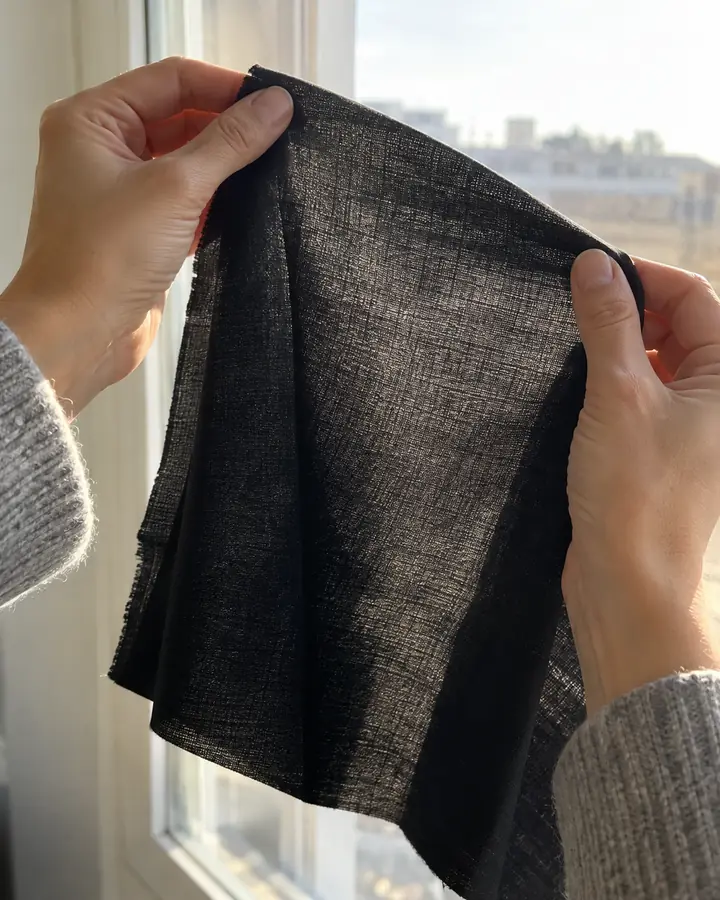
Lace is a detail fabric. It is beautiful on a black dress for an evening, but almost always needs a lining or a slip because the openwork pattern is transparent. Wool knit is a good cold-weather option. A fine merino knit is soft and opaque, while a chunky knit can stretch at the elbows and bag at the knees, so check the weight and the shape of the knit before you buy.
How to test a fabric in a shop
- Hold a section against a window to check opacity from the front and the back.
- Pinch the fabric and let go. If it creases and stays creased, expect the same in a suitcase.
- Look at the surface under the shop light, then near a window. Matte crepe and jersey change less than satin.
- Check the care label before you buy. A dry-clean-only dress is a real commitment.
Frequently asked questions
What is the most opaque fabric for a black dress?
Medium-weight matte crepe and ponte are usually the most opaque. Check any fabric against a window before buying, because weight and dye vary from one brand to the next.
Is ponte too casual for an evening?
Not if the cut is formal. A ponte sheath with a neat neckline and sharp heels can work for a dinner. For a more dressy look, choose satin-back crepe.